Red Thread for Pooja
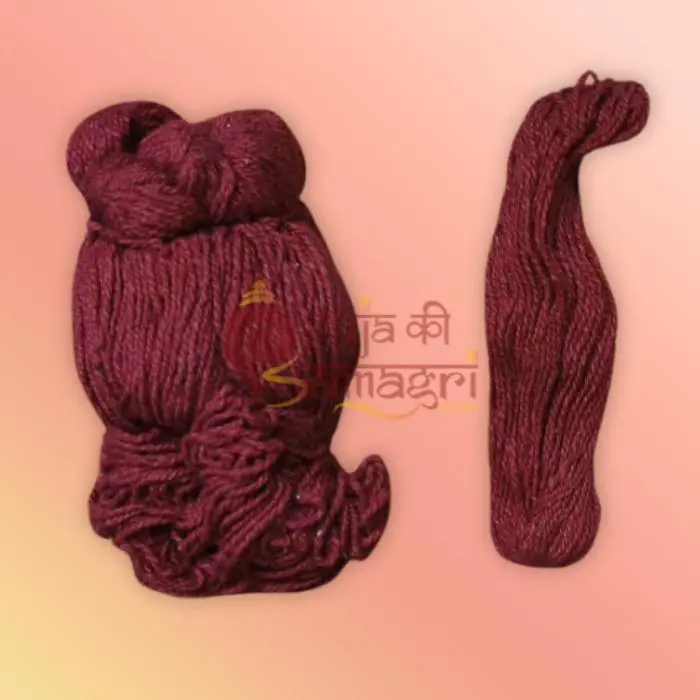
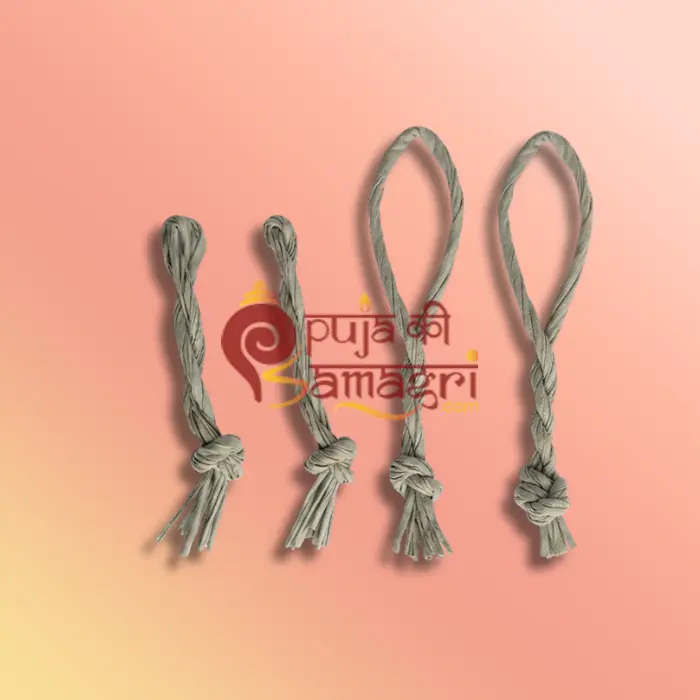
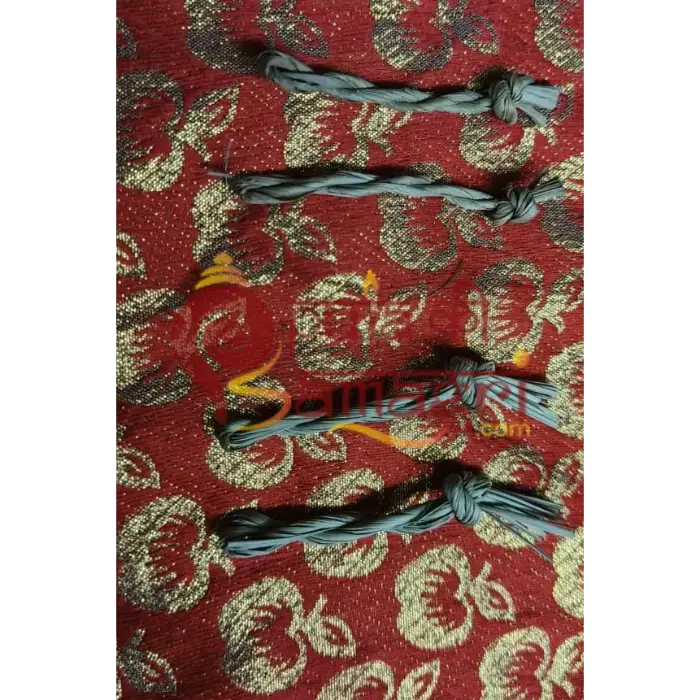
The Red Dhaaga, known as Kalava or Mauli, is that thread and no Hindu ceremony is considered formally begun until it is tied on the wrist of every participant present.
₹700.00
Fast Shipping
Carrier information
24/7 Support
Unlimited help desk
Payment Options
Description
Red Dhaaga for puja is the sacred Kalava thread used across all Hindu rituals as the first act of divine protection and ritual invocation.
Its origin traces to the Vamana avatar of Lord Vishnu, where he tied the Raksha Sutra on King Bali's wrist to grant him immortality, establishing wrist-tying as a gesture of divine blessing across generations.
Red is prescribed for the Kalava because it represents Shakti, vitality, and protection.
Tying the lal dhaga invokes the combined blessings of the Trideva; Brahma, Vishnu, and Shiva and the Tridevi; Saraswati, Lakshmi, and Durga through a single act of ritual tying.
The Atharvaveda Samhita prescribes the sacred protective thread as a Raksha Sutra at the commencement of every Vedic ritual.
Traditional belief also holds that the wrist is the point through which vital nerves governing the body pass, making the thread's placement both spiritually and physiologically significant.

Key Features
- Prescribed in the Atharvaveda Samhita as the Raksha Sutra, carrying one of the oldest documented ritual mandates for wrist-tying at the commencement of Hindu worship
- Invokes the Trideva and Tridevi simultaneously, making it a conduit for the combined blessings of all six primary Hindu deities through a single thread
- Pure cotton construction ensures the Sattvic purity required for sacred wrist application — synthetic threads are not a ritual substitute
Why Choose This Product
- Prescribed Across All Rituals: No Hindu ceremony is formally commenced without the Red Dhaaga; its presence is mandated across every tradition, deity, and occasion without exception.
- Pure Cotton for Authentic Use: Made from natural cotton ensuring full ritual appropriateness for wrist application, Kalash tying, and sacred vessel use where synthetic threads are not accepted.
- Universally Applicable: Unlike colour-specific offerings tied to individual deities, the Red Dhaaga invokes all six primary Hindu deities simultaneously, making it the most broadly applicable thread in any puja samagri setup.
Uses / पूजा में उपयोग
- Wrist Tying at Puja Commencement: Tied by the priest on the right wrist of men and unmarried women, and the left wrist of married women, as the first ritual act before any puja or havan formally begins.
- Havan and Yajna Participant Tying: Tied on the wrists of all Yajmaan and family members during havan and yajna, invoking the Trideva's protection over everyone present for the full duration of the sacred fire ceremony.
- Navratri and Festival Rituals: Distributed and tied by the purohit during Navratri, Diwali, and Ganesh Chaturthi, connecting every devotee present to the collective blessings of the festival's presiding deity.
- Kalash and Sacred Vessel Wrapping: Tied around the neck of the Kalash during Kalash Sthapana, sanctifying the vessel and binding the deity's presence within it for the duration of the puja or vrata.
- Daily Devotional Wear: Kept on the wrist after puja as a continuous reminder of the sankalpa taken during worship, worn until it naturally falls off or is respectfully immersed in water.
When the Red Dhaaga is tied before the first mantra is spoken, it seals the devotee's sankalpa, invites the protection of the Trideva and Tridevi, and declares to the divine that the worship that follows is being conducted with full sincerity and sacred intention.