Supari for Pooja / Betel Nuts Puja

SKU: PUJE-0426-228

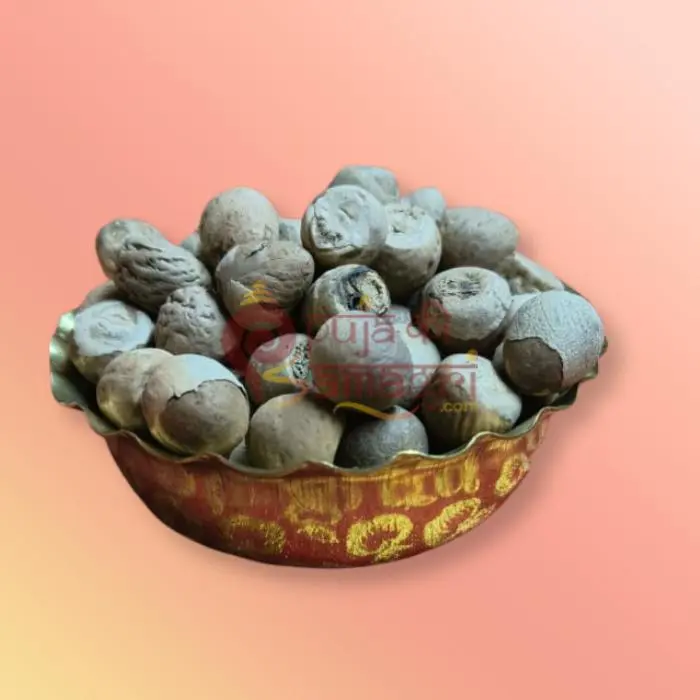
Of all the fruits placed on a puja thali, none carries the ritual versatility of Supari. Known as Poogi Phal in Sanskrit, it is the one offering that can stand in for a deity, represent a human presence, complete a Kalash, and fulfil a Sankalpa; all within the same ceremony.

0 People watching this product now!

Fast Shipping

Carrier information

product-support

24/7 Support

Unlimited help desk

payment-option

Payment Options

Description

Supari, known as Poogi Phal in Sanskrit, is the seed of the Areca palm, commonly used in puja in its whole form, with the smaller conical variety preferred for ritual purposes.

Its hardness symbolises the devotee’s ego, and offering Supari represents surrendering inner rigidity before the divine.

What distinguishes supari for puja is its role as a ritual substitute. In the absence of an idol, the deity can be invoked into the Supari and worshipped directly.

It may represent deities such as Brahma, Vishnu, Varuna or Indra depending on the ritual context. In Yagna traditions, a whole Supari wrapped in cloth is used to symbolically represent the yajmaan’s wife when her presence is required.

Supari also holds importance in Kalash Puja, where it is placed inside the Kalash during invocation, and in Sankalpa rituals where it is offered to the priest along with Dakshina.

Its presence ensures ritual completeness and symbolic continuity.

Key Features

  • The only puja offering capable of substituting a deity idol, representing Brahma, Vishnu, Ganesha, and planetary deities across different ritual contexts
  • Whole and uncut form is mandatory only intact Supari carries the ritual sanctity required for Kalash placement, deity invocation, and Sankalpa offerings
  • Required across the widest range of ritual functions of any single puja item use

Why Choose This Product

  • Unmatched Ritual Versatility: No other puja item represents deities, planets, and human participants simultaneously; making Supari irreplaceable in any complete puja samagri setup.
  • Correct Ritual Grade: Sourced specifically as puja Supari in the whole, uncut form not the larger consumption variety ensuring the correct size and ritual integrity for all puja applications.
  • Universal Requirement: From daily home worship to Yagna, weddings, and festival pujas, Supari is required across every tradition, deity, and occasion without exception.

Uses / पूजा में उपयोग

  • Kalash Sthapana: Placed inside the Kalash while reciting the prescribed mantra, its presence making the Kalash auspicious and fruitful for the full duration of the ritual.
  • Ganesha Invocation: Wrapped in Mauli thread and placed on a betel leaf with Akshat, the rounded Supari is used to invoke and worship Lord Ganesha when a separate idol is not part of the puja setup.
  • Sankalpa and Purohit Dakshina: Given to the purohit alongside Dakshina as part of the formal Sankalpa, representing the devotee's sacred vow and entrusting of the ritual to the priest.
  • NavaGraha Puja: Individual Suparis represent each of the nine planets during NavaGraha puja, taking on specific planetary deity identities as prescribed in the ritual vidhi.
  • Wedding and Auspicious Ceremonies: Offered and exchanged during Hindu weddings and engagement rituals as a symbol of auspicious beginning and the sacred bond being established between two families.

A fruit that can become a deity, stand in for a person, complete a Kalash, and seal a vow; Supari does not announce its significance on the puja thali, yet its absence is noticed before any other offering is missed.