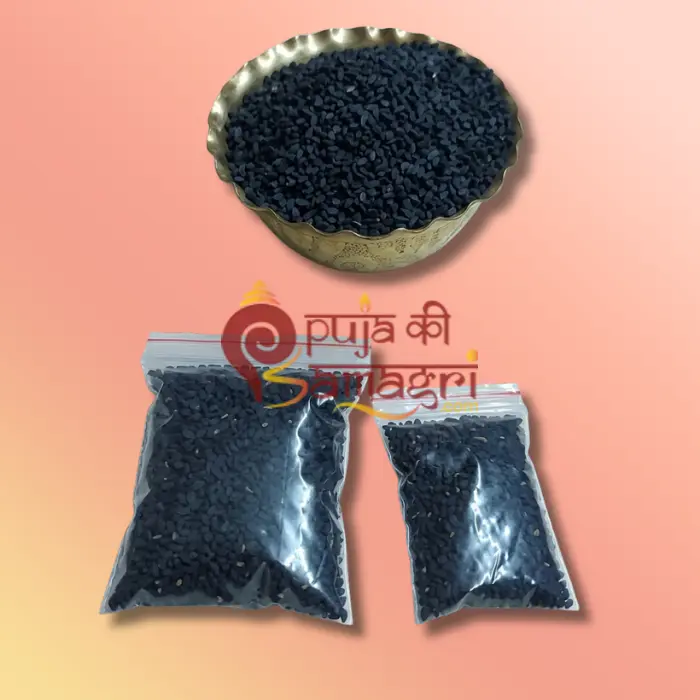
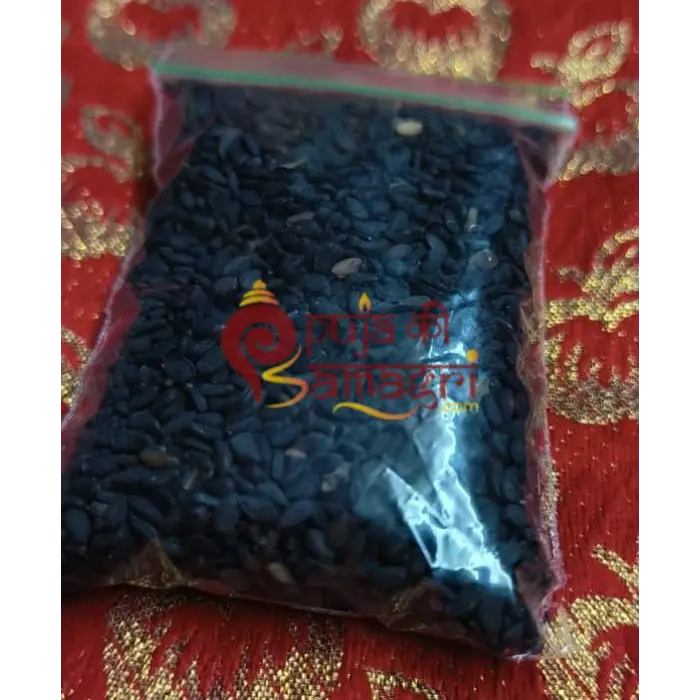
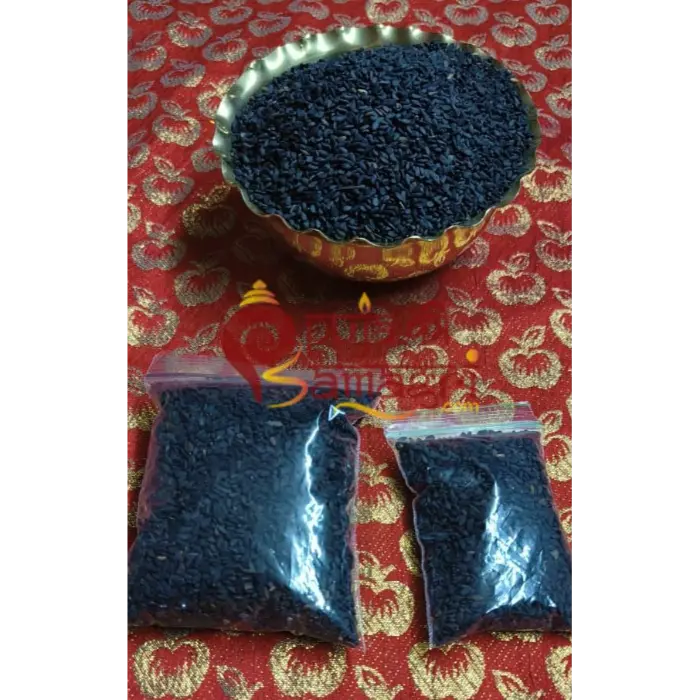
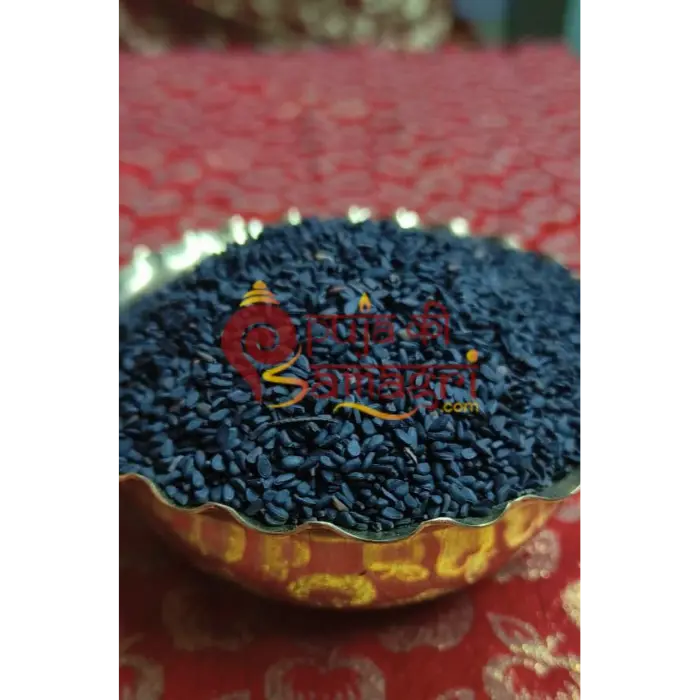
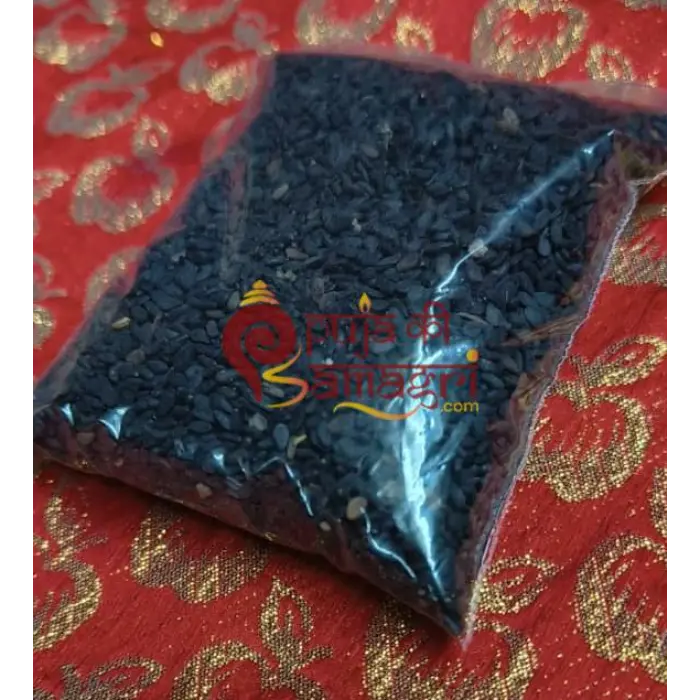
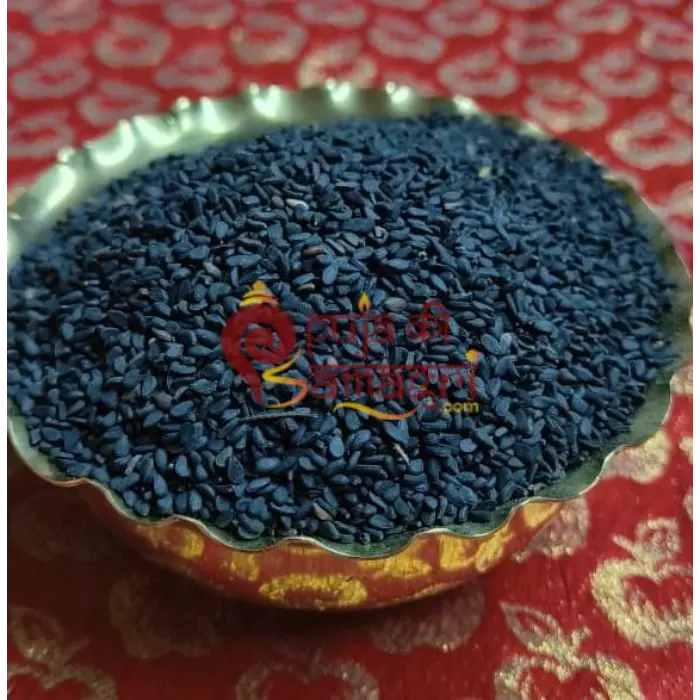
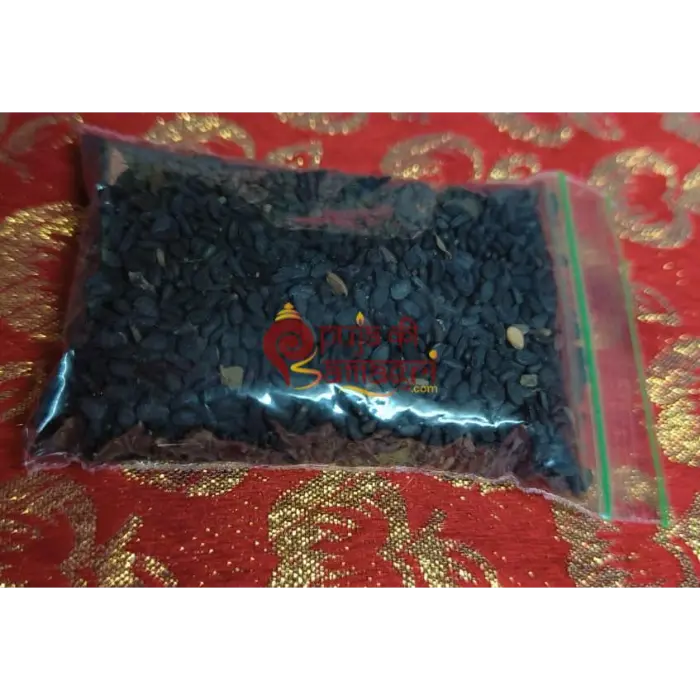
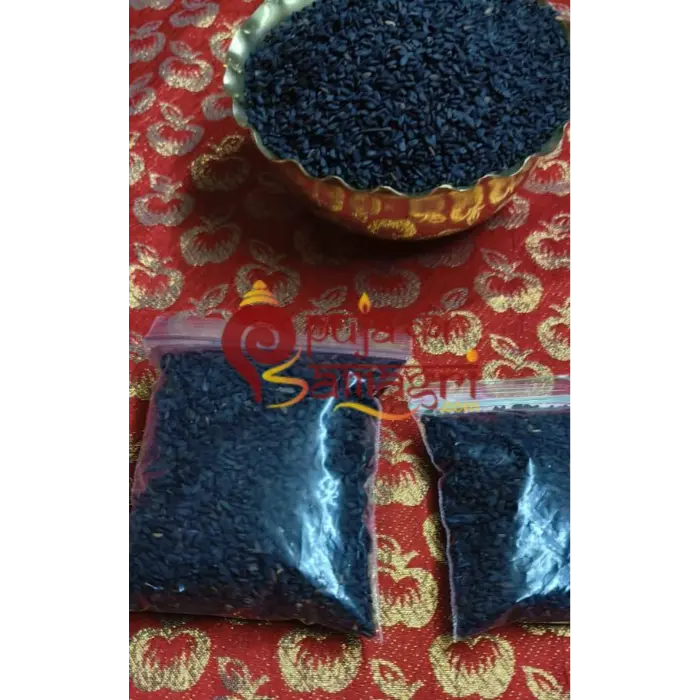
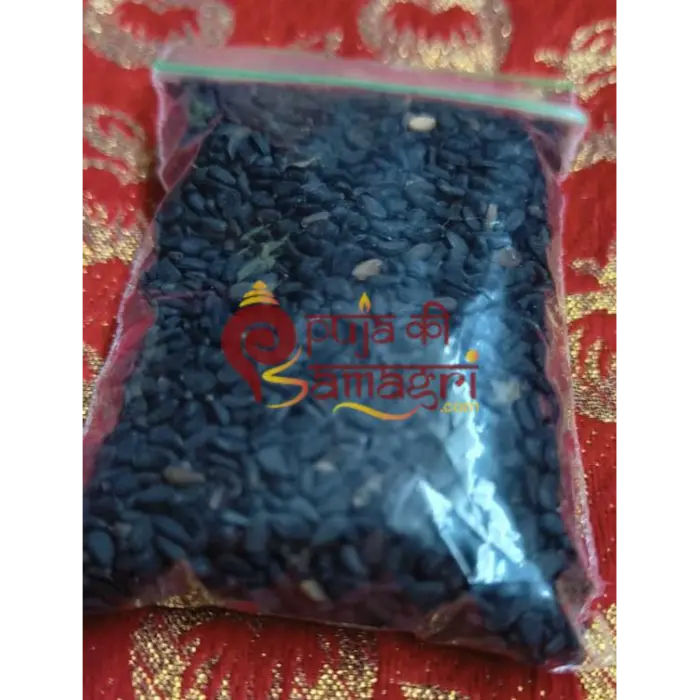
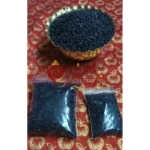
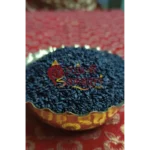
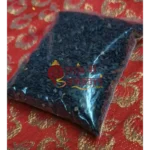
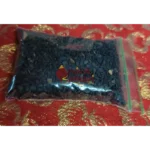
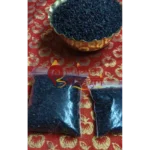
Til Kalo / Black Sesame Seeds
According to the Vayu Purana, black sesame seeds uniquely satisfy ancestors in a way no other offering can. Kalo Til, one of the oldest ritual ingredients in Hindu tradition, carries this scriptural weight every time it is placed on the puja thali or offered into sacred water.
₹700.00
Fast Shipping
Carrier information
24/7 Support
Unlimited help desk
Payment Options
Description
Black sesame seeds for puja, known as Kala Til in Hindi and Kalo Til in Bengali, hold one of the most specific and irreplaceable roles in Hindu ritual practice.
Ancient texts including the Garuda Purana and Vayu Purana prescribe their use in Shradh and Tarpan rituals, where water mixed with Kala Til is offered to ancestors during Pitru Paksha to cleanse their karmic impurities and provide them nourishment in Pitru Loka.
Hindu mythology traces the origin of sesame seeds to Lord Vishnu, describing them as having emerged from his sweat during the cosmic churning, which is why they are considered seeds of immortality and treated as spiritually potent offerings.
This mythological origin gives black sesame seeds an authority in puja that distinguishes them from ordinary grains or seeds.
In Bengali Dashakarma puja, Kalo Til is listed as a prescribed ingredient in the Panchashasha, the five sacred grains used in Kalparambho and other ritual arrangements, placing it firmly within the structured samagri requirements of Bengali Hindu tradition. Its consistent presence across ancestral rites reinforces its role as a bridge between the living and the departed in Hindu ritual belief.

Key Features
- Specifically mentioned in the Garuda Purana and Vayu Purana for ancestral rites, giving Kala Til a rare level of ritual legitimacy
- Linked to Lord Vishnu in ancient texts and regarded as seeds of immortality, making them one of the most powerful offerings in Hindu tradition
- Included in the Bengali Dashakarma Panchashasya set, required alongside rice, sesame, mung and mashkalai for Kalparambho rituals
Why Choose This Product
- Ritual Specific, Not Interchangeable: Black sesame is scripturally prescribed for Tarpan, Shradh and Shiva puja; substituting with white til is not considered correct in these rites, making Kalo Til essential for ritual accuracy
- Year-Round Ritual Requirement: Used across Pitru Paksha, Maha Shivaratri, monthly Amavasya Tarpan and Dashakarma ceremonies, ensuring it remains a regularly needed item in any puja samagri stock
- Pure and Ritual-Grade: Carefully sourced and minimally processed Kala Til retains its natural integrity, meeting the purity standards required for offerings to ancestors and deities in traditional Hindu practices
Uses / पूजा में उपयोग
- Pitru Paksha Tarpan: Water mixed with Kalo Til is offered three times to ancestors during Tarpan, believed to quench their thirst, cleanse karmic impurities, and satisfy departed souls across three generations of lineage.
- Pind Daan during Shradh: Cooked rice balls mixed with black sesame seeds and ghee are prepared as Pind Daan and offered to ancestors during Shradh rituals, described in the Garuda Purana as a means of granting nourishment and eventual liberation to departed souls.
- Lord Shiva Puja Offering: Kala Til is offered to Lord Shiva during Maha Shivaratri and regular Shiva worship, symbolising surrender of ego and desire, and believed to invoke his blessings for spiritual purity and protection.
- Bengali Dashakarma Panchashasha: Included as one of the five sacred grains in the Panchashasha arrangement during Bengali Durga Puja Kalparambho alongside rice, mung, mashkalai, and millet, completing the prescribed five-grain ritual setup.
- Havan and Yajna Offering: Offered into the sacred fire during havan and yajna, black sesame seeds are considered an auspicious oblation believed to ward off negative energies and please the deities present in the sacred flame.
When the scriptures say that black sesame seeds uniquely satisfy ancestors in a way no other offering can, placing Kalo Til on the puja thali becomes not just a ritual act but a direct fulfilment of one of Hinduism's most ancient and reverently held promises to the departed.